Australia leads the way in a new approach to removing carbon dioxide from the atmosphere

Australia leads the way in a new approach to removing carbon dioxide from the atmosphere
Stephen Joseph, Best Energies, Australia, February 7, 2007
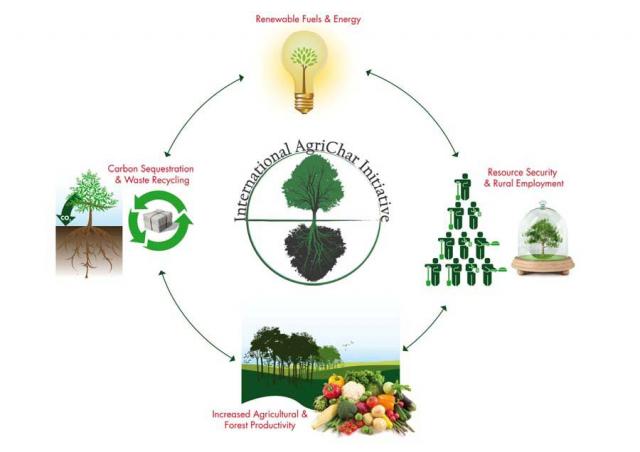
Australia has been selected as the host of the first International Conference on the use of Agrichar (also known as Bio-char), to be held between 29th April and 2nd May, 2007 in the sea-side resort of Terrigal, just a few hours drive from Sydney.

The Conference will bring together some of the world’s most talented scientists and
agriculturists to explore a modern approach to an ancient solution to two of the most
pressing problems facing mankind today – global warming and adequate food production.

The use of agrichar in agriculture offers an instant means of removing carbon dioxide
from the atmosphere, and at the same time enables the repair of damaged soils, increased crop yield and the production of a cheap, clean form of energy.

Agrichar is produced when organic matter, such as agricultural wastes and plantation
timber, is broken down in an oxygen free environment, producing charcoal (Agrichar)
and a gas that can be used for energy in much the same way as natural gas or LPG. The
gas can be used to produce electricity, heat or renewable fuels.

When Agrichar is used in farming it can significantly increase crop yields and reduce the amount of fertiliser required. Thousands of years ago, it was used with great success by the Amazonian Indians who produced crops so large that they made the early explorers gasp in wonder. The soil found in these regions is commonly known as ‘terra preta’. Adding agrichar to the soil improves its structure, fertility and water retention capacity and will enable farmers in all parts of the world, developed and developing, to grow bigger and healthier crops, and, at the same time, produce a clean and affordable source of energy.

Possibly the most important feature of agrichar is that it contains very high levels of carbon. Carbon is an essential component of productive soil, but depleted levels are not normally restored. However just one hectare of 1 meter-deep agrichar treated soil can contain 250 tonnes of carbon, compared to 100 tonnes in ordinary soil, which makes it a very efficient and immediately viable form of carbon sequestration.

This concept has huge potential in Australia where soil carbon levels and soil fertility are amongst the lowest in the world. Agrichar offers an opportunity not only for the increased sustainability of agricultural soils but also for the management of waste products, the production of renewable energy and elimination of carbon dioxide from theatmosphere.

With the introduction of carbon trading farmers have a new source of income. They can
grow trees to produce renewable energy/fuel, use the carbon to improve their soil
fertility, reduce fertiliser and water requirements and improve their yields. The faster the trees and crops grow the greater will be the uptake of carbon dioxide.
Supporting the use of agrichar also enables governments to begin immediate action to
reduce carbon dioxide levels in the atmosphere, without waiting for the construction of nuclear power plants, or the development of technology to reduce carbon dioxide
emissions from coal.

Storing carbon in char-enhanced soil provides an instant way of tackling Global
Warming.

Contact:
Dr Stephen Joseph
Tel: 0408 415 477
Email: stephen@bestenergies.com.au
Web; www.iaiconference.org