Chris Adam Kiln Chars Coconut Shells in Kenya

Last updated November 07, 2009

Chris Adam Kiln Chars Coconut Shells in Kenya
November 5, 2009

Cocnut Husk in Kenya
Coconut Husk in Kenya

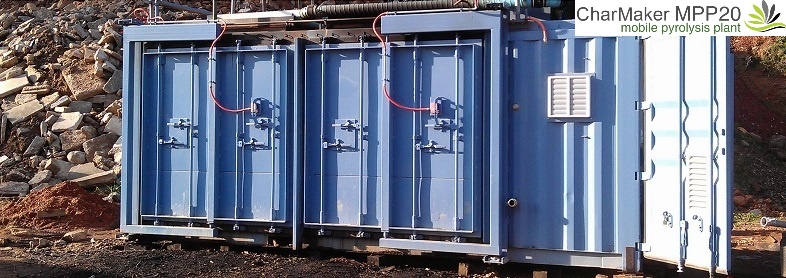
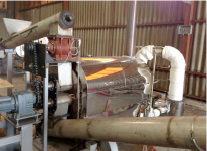
A Chris Adam Kiln retort which was built a year ago at the Kenyan Coast.

They are using it 3x a week to carbonize coconut shells and it seems to work well.

--Chris

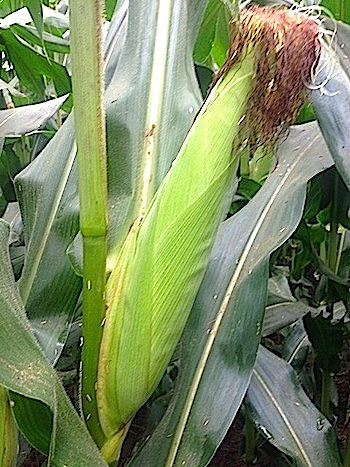
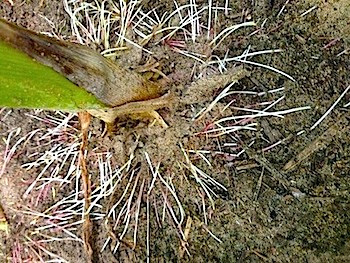
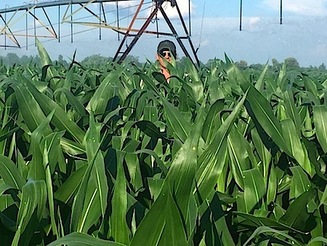
Trials in Maize, reactivating dormant genes using high doses of Salicylic acid and Charcoal

Last updated October 29, 2009

Nikolaus Foidl, October, 2009

Recent literature suggest that the split from a common ancestor between rice and the ancestor of maize happened some 45 to 60 million years ago. Maize was formed from teosinte as a common ancestor. Sorghum apparently split from the common ancestor with maize sometimes between 16.6 and 11.9 million years ago.

If the environment is overcharging the abilities of the gene set, then the plant seems simply to split up in different lines of development (??), although keeping the, during evolution silenced gene sets, or inactivated subprograms.

Now and then, trigger events, like stress or chemical influence, or not compatible gene sets in hybridizations, cause those silenced subprograms to activate and express themselves causing to see, what’s hiding in their past.

These so called trash genes, with apparently no function, have still a function and can be switched on or off as genetic expression If we find out the trigger mechanism, and as well if we find out their ancient function and the use of their reactivation in an actual environment, we might be able to get much higher productivities per ha, then by raising densities.

In the example of Maize, I want to show, when using Salicylic acid in high doses together with bio char, we have the possibility to get a glimpse of what reactivation could bring us as a useful gene expression in future.

Proceedings Available for North American BioChar Conference

Last updated October 29, 2009

North American Biochar Conference: Proceedings Available
October , 2009

Conference Sessions, Papers and Presentations are now available for the North American Biochar Conference9 - 12 August, 2009

http://cees.colorado.edu/northamericanbiochar.html

Biomass Heating System and Biochar

Last updated October 21, 2009

Biomass Heating System and Biochar
Burt's Greenhouse , Kingston, Ontario, Canada
http://www.burtsgh.com/index.php/environmental/biomass/

"Since 2005 Burt's Greenhouses have been heating their greenhouses with Biomass. What is Biomass? In our case it is wood. We burn waste wood (wood collected from construction, furniture manufactures, skids, etc. It this wood were not used in this way it would likely be land-filled.

What is the environmental advantage of this? Typically heat is derived from fossil fuels. In our case it was furnace oil. Fossil fuel represents a large store of carbon that is inert until it is released via combustion. The combustion of Biomass or Fossil fuel emits Carbon Dioxide gas. Carbon Dioxide is known to contribute to global warming. It is commonly called a greenhouse gas since its presence in the atmosphere mimics that of the covering on a greenhouse by trapping some of the heat that enters the earths atmosphere.
Why is the Carbon Dioxide emitted from Biomass different from that emitted from Fossil Fuels. In the atmosphere there is no difference but the difference lies in the fact that Biomass is renewable. The wood that we derive our fuel from has captured CO2 from the atmosphere over its lifetime. We do release that C02 to the atmosphere but currently growing Biomass is able to capture it. We can then burn that Biomass to produce heat thus creating a closed cycle. This is why Biomass is considered a renewable energy source.
Of course it does take some fossil fuel to drive this process since the wood must be ground and trucked however it is still a fraction of the energy that we derive from the wood. Our net C02 emissions are dramatically reduced but still positive.

What is next for us? Hopefully two things. We would like to be growing our own Biomass likely in the form of warm season grasses like switchgrass or miscanthus. That would mean we could become almost energy self-sufficient. We also would like to be producing what is called Biochar."

Design for flaring offgasses

Last updated October 19, 2009

Nando M. Breiter
The CarbonZero Project

0736 shows my kiln, filled with wood to char. Nevermind that it looks a little blacked ( ... aborted previous attempt)

0737 shows the new cover I cut this afternoon, from 3mm sheet steel

0738 shows some firebricks arranged on top of the cover, it's weighted to help seal it. The fact that it's not screwed or clamped down allows for a simple pressure relief valve that won't get clogged with tar.

0739 shows the planned positioning of an afterburner, centered on the cover plate

0740 shows the stove pipe chimney on top of the afterburner.

The retort is surrounded with firebrick and heated from below, using a bit of firewood. It's an air tight process, rather than a restricted oxygen flow process. This allows close control of the pyrolysis temperature.

So here's a question for those with experience in these things. I plan to drill a hole in the center of the cover to vent the offgases. I could simply drill a 10mm hole, let them flow up into my primitive afterburner, and see how well it works. Perhaps there is a better way. I could imagine using a proper burner, which I know next to nothing about designing, and heating water, stones, air, driving a cyclone engine, etc.
I've had trouble with the lid (on the barrel) warping when it heats up. I wound up cutting 3 different lids trying different thicknesses of sheet metal. Today I managed with the original and lots of weight on one corner. I'm continually surprised by the challenges you encounter doing this.

The lid I wound up using had a 6 cm hole it it, so I put 2 firebricks over the top of it and left a slit about 1 cm wide. Since the wood was already dry, I had the kiln up to 300 C in about 30 minutes time. That was encouraging. But since I was having trouble with the lid, I unfortunately couldn't collect data regarding wood weights and regular temperature measurements.

Once I had a steady stream of smoke coming from the center hole, I placed my afterburner over it and lit the flare using a paraffin fire starting cube. That worked for about 5 minutes or so. When the paraffin was exhausted, the flare went out. So I used another paraffin cube to get it going again, and I added 2 small diameter sticks of wood through gaps under the afterburner to maintain the flame, as you can see in 0741 & 0743. That worked. The flare didn't go out again.

07410741
07430743

0742 shows how clean the flame was at this point, no visible smoke.
07420742

After a while, the unit began to produce a greater flow of gas, and it seems there wasn't enough oxygen available because the gas coming out the stack began to get a little smokey. I took a few large diameter pipes, what I had at hand, and placed them to try and deliver more air. That didn't help to clear the smoke. I also tried to ease the afterburner higher to see if a larger gap underneath would provide more air, and it tipped over.
See 0746 and 0747. The flare makes an easily audible "roar". :-) I'm not sure at what point the flare no longer needed a support flame, but here it was self maintaining.

07460746

An interesting result with this burn is that the retort at the top measuring point only reached 360 C. My guess is that this is because I was releasing heat with the offgases more freely from the center hole, which was approximately 6 cm2 in surface area. Interesting thought that the retort temperature might be partially regulated by the size of this hole.

As you can see in 0744, an afterburner designed from thin metal sheet isn't going to be durable. My thought of the moment is that the best would be if the offgases could be flared in a firebrick enclosure. That implies piping them, as a firebrick enclosure would be impractical above the kiln. If the offgases condense, they will block the pipework, so that implies insulation and/or using a bit of the heat generated to keep the pipes warm.
07440744

Perhaps I could also just increase the height of the existing firebrick enclosure. Ideally, the smoke from the wood fire underneath would also be flared. I'd like to keep the design simple so it could be replicated widely in a variety of contexts using cheap, available materials and simple manufacturing techniques.

I also need to tackle the problem of a retort cover that won't warp with the heat it is subjected to. I tried going thinner but that didn't help. The idea is to be able to swap barrels in and out of the enclosure quickly and use the same durable cover with whatever fittings are needed for the offgas / flare system.

Any suggestions are welcome ...

Nando

Biochar on the Farm

Last updated October 14, 2009

Biochar on the Farm
Josh Frye, International Biochar initiative, October 14, 2009

Hacking the Sky & Biochar Rap and Clock is Ticking

Last updated October 15, 2009

Erich Knight, Musical Inspiration

Clock is Tickin' (Bio-Char rap funk blues)

Words by: Don Steck, Tracy Rush, Erich Knight
Music by: Tracy Rush, Don Steck, Frank Skavenski

“Time is running out…the clock is tickin‘ ” (4x)
Let’s get it together for the earth takes a lickin’
Waitin’ for the day we can join the great circle
The web of life,…. Become part of the cycle
Time is runnin’ out .. The clock is tickin; (4x)
Let’s get it together for the earth takes a lickin’

All Biochars are Not Created Equal, and How to Tell Them Apart

Last updated October 10, 2009

IBI Conference Updates
Hugh McLaughlin, PhD, PE, Paul S. Anderson, PhD, Frank E. Shieldsand Thomas B. Reed, PhD

*After much expansion and refinement, the final copy (Version 2) of the "All Biochars..." paper has been released back to the NABC (North America Biochars Conference, Boulder Colorado, August 2009) for inclusion in their proceedings.*

### ABSTRACT ###

> The use of charcoal as a soil amendment and for CO2 sequestration raises many questions about the characteristics of those “biochars” and their impacts on soils and organisms. This paper reviews and revises the analyses of the principal characteristics used to distinguish biochars, and presents a small survey of measured properties. Explicit terminology is proposed about “resident and mobile carbon and other matter” in biochars intended for addition to soils rather than for use as a fuel. Specific data are presented for commercial lump charcoals and Top-Lit UpDraft (TLUD) charcoals. Easy methods for informal testing of chars are presented to determine several key biochar characteristics. The major conclusions are: 1) Currently available biochars vary significantly in key properties, 2) Great attention should be taken to know the characteristics of any charcoals being added to soils, and 3) Reports of the responses (whether favorable or unfavorable) of plants and soils to biochar applications are of questionable value without corresponding knowledge of the characteristics of the applied biochars

Founders Meeting, Biochar Northeast

Last updated October 10, 2009
in

YOU ARE INVITED TO THE
Founding Members Meeting
of
Biochar Northeast, inc.
not-for-profit association to study, advocate and use biochar in environmental management
and the
Northeast Biochar Research Consortium
collaboration of institutions, industry, farmers, foresters & landowners

8pm, Friday, November 13, 2009
Campus Center, UMass Amherst

In our onrushing confrontation with multiple limits
of our planet’s Carrying Capacity,
Earth-changing events are moving rapidly,
and this calls for quick collective social action.
We must form organizations to advance this new carbon-negative,
soil-regenerating, species-saving strategy and its technologies.
Therefore, this Founders’ Meeting will ratify a call to action,
two instruments of organization, and two initial Board of Directors:
Biochar Northeast, inc.
to facilitate & accelerate connections, services, policy & capital
to rapidly disseminate & deploy carbon-negative strategy using biochar as a primary tool
Northeast Biochar Research Consortium
to monitor, evaluate and recommend biochar production technologies,
and biochar use of on soils, crops, animals, foods, farms, forests & watersheds.

5pm Social Hour downstairs auditorium lobby
6pm Banquet Dinner upstairs 10th floor dining room
7pm Insight, Inspiration & Awards
The Road Ahead:
Carbon-Negative Food & Energy
for Northeast Communities
8pm Founders Meeting open to all supporters
9pm Meeting Adjourns — Celebration Begins

The Banquet Dinner is $35, by reservation only, and space is limited
Reserve your seat when you register for the daytime Biochar Symposium:
www.nsm.umass.edu/biochar09/
Anyone can attend the after-dinner Founding Members Meeting
The Dining Room will be opened to all members after dinner
To participate and vote at the Founders Meeting, enroll as a Biochar Northeast member:
complete a short survey and pay a $25 membership fee
www.carbon-negative.us/membership
To nominate a member to either initial Board of Directors, send email to:
dyarrow@nycap.rr.com

MAKING BIOCHAR: with Peter Hirst of New England Biochar

Last updated October 10, 2009

MAKING BIOCHAR: with Peter Hirst of New England Biochar

Many thanks to George Packard of Parrot Creek Productions, Warner, New Hampshire for some really fine work. This is the short version of greater works in progress. Very well done by George and much appreciated.

Peter Hirst

Syndicate content