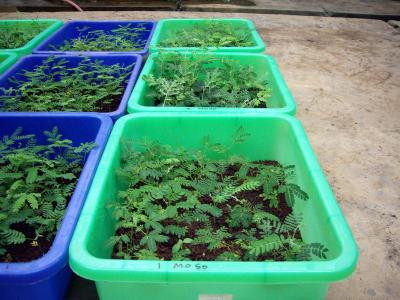
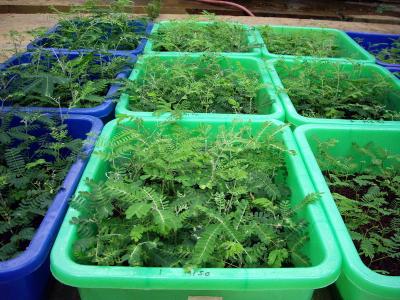
Rice Husk
Carbonized Rice Hull
Courtesy www.Biochars.com, September 28,2008
Philippine Rice Research Institute (PhilRice)Rice Technology Bulletin, No. 47, 2005
Evaluating Performance of Ecologically Sound Organic Substrates under Different Temperature Regimes
SHAHIDUL ISLAM, U Arkansas, INTERNATIONAL JOURNAL OF AGRICULTURE & BIOLOGY, 2008
ABSTRACT
Greenhouse trials were carried out over two years to investigate the high temperature (25ºC, 30ºC & 35ºC) effects on ecologically sound untreated organic substrates viz., coconut coir and rice husk charcoal, in comparison to that of rock wool using tomato (Lycopersicon esculentum Miller) as a test crop. There were no significant differences in the root dry matter, stem dry matter, fruit dry matter, shoot and root ratio, ascorbic acid, total soluble solid, fruit acidity, leaf chlorophyll contents and pH of the fruit homogenate. Among the substrates, water holding capacity was larger in rock wool followed by coconut coir and rice husk charcoal. Bulk density and total pore space were lower in rice husk charcoal than coconut coir and rock wool. Regarding the chemical properties, rice husk charcoal and coconut coir had higher EC values compared to rock wool. Rice husk charcoal had relatively higher pH followed by rock wool and coconut coir. In the case of CEC rook wool showed significantly higher values than coconut coir and rice husk charcoal. It also appeared that rice husk charcoal and coconut coir gave similar and/or better crop performance and yield of tomatoes than rock wool under high temperature stress conditions namely 30oC and 35ºC as compared with 25ºC. Thus, rice husk charcoal and coconut coir can be used successfully as growing media amendments for producing greenhouse tomato as well as other nursery crops.
Key Words: Organic substrates; Temperature; Stress; Tomato; Quality
Islam, S., 2008. Evaluating performance of ecologically sound organic substrates under different temperature regimes. Int. J. Agri. Biol.,10: 297-300
Sustainable Technology:Biochar
Sustainable Technology: Biochar
Julie Major, Workshop presented to Sustainable Harvest International,Honduras, January 2008
Reported in La Cosecha (The Harvest), Sustainable Harvest International newsletter, Spring 2008, p. 4.
Black is the New Green: SHI Field Staff Learn the Benefits of Biochar for Agriculture
During the annual Board and staff meeting held in January in Honduras, field staff from Honduras, Nicaragua, Belize and Panama attended a workshop presented by Julie Major of Cornell University on managing soils with biochar. Biochar can be made simply and cheaply from any organic material, just by piling it, covering it up with soil to exclude air and setting it on fire. During the workshop biochar was made from rice hulls and pieces of pine wood for demonstration, but any crop residue or plant waste can be used to make biochar, such as coffee pulp, sawdust, sugarcane bagasse, etc.
Sustainable Harvest International
http://www.sustainableharvest.org/
Julie Major, Cornell University
http://www.people.cornell.edu/pages/jm322/
Effects of mycorrhizal fungi and biochar 75 Days
Robert Flanagan, Hangzhou Sustainable Agricultural Food & Fuel Enterprise Co., Ltd.
(SAFFE), February 5, 2008
I just got to visit my biochar trial at BIOTROP today so I took a few photos to give all you some idea of the profound difference biochar makes to subsoil
Control
Video:
http://www.youtube.com/watch?v=mvo1w8gFSts
What we're seeing is the plants treated with VAM fungi + biochar are a lot darker green and show more plant growth at the 75day mark so I'll push on up to day90 and see what happens.
Robert Flanagan
Chairman & President
Hangzhou Sustainable Agricultural Food & Fuel Enterprise Co., Ltd.
Skype "saffechina"
Tel: 86-571-881-850-67
Cell: 86-130-189-959-57
Rice Planting Experiment With Charcoal Enriched Soil
Jochen Binikowski buddelbini@yahoo.de May 18, 2007
http://www.youtube.com/watch?v=C2FMy9gIuws&NR=1
Experimental rice Planting Project
5 paddys at 5 x 4 meters each prepared with rice husk charcoal
Jochen Binikowski buddelbini@yahoo.de
www.buddel.de/kft/index.htm
Biochar Trials in Hangzhou,China
Biochar Trials in Hangzhou, China (pdf)
Robert Flanagan, Saffe China, July 10, 2007
Select image below to see in Gallery
[G2:754]
This is a small trial I'm doing for some farmers just outside Hangzhou to show them the benefits of Biochar. I've 48 plots in all so 24 with rice husk charcoal addition at 20Kg per plot. This trial is not for scientific data collection we have that in another trial a little further outside town.
Oliver Enterprises: Carbonized Rice Husk
Oliver Enterprises, Philippines
[img_assist|nid=381|title=Oliver Carbonized Rice Husk|desc=|link=node|align=center|width=400|height=118]
Effects of placing rice husk charcoal inside soil ridges for soil aeration and growth and yield of sweet potato in wet lowland
Effects of placing rice husk charcoal inside soil ridges for soil aeration and growth and yield of sweet potato in wet lowland fields
Islam, A. F. M. S.; Kitaya, Y.; Hirai, H.; Yanase, M.; Mori, G.; Kiyota, M. 1999
Journal of Root Crops 25(1): 85-97
MOISTURE CHARACTERISTICS OF THE ARTIFICIAL MEDIA
MOISTURE CHARACTERISTICS OF THE ARTIFICIAL MEDIA COMPOSED OF RICE HUSK AND DEMONSTRATION ON SWEET POTATO CULTIVATION
S.Yamanaka1, A.Tanaka2, K. Nakaji3
1Department of Bioproduction Environmental Science, Kyushu University, 6-10-1,
Hakozaki, Higashi-ku, Fukuoka 812-8581, Japan. ytsimsk@agr.kyushu-u.ac.jp
2Coastal Bioenvironment Center, Saga University, 152-1, Shonan-cho, Karatsu 847-0021,
Saga, Japan. tanakaa@cc.saga-u.ac.jp
3University Farm, Kyushu University, Kasuya-cho, Kasuya-gun, Fukuoka 811-2307,
Japan. knkjfam@mbox.nc.kyushu-u.ac.jp
ABSTRACT
Rice Husk Char in, Efficient use of agri-byproducts
Development of a Comprehensive Series of Technologies for Lowland Cropping Systems in Northeast Thailand
Nobuyuki KABAKI1, Haruo TAMURA, Shinsaku FUJIMORI,Hirohiko MORITA4 , Bowpit URAIPONG5 , Uthai ARROMRATANA5 and Tawachai Na NAGARA5
Japan International Research center for Agricultural Sciences,
JARQ - January 2003 - (Vol. 37 No. 1 )
5. Efficient use of agri-byproducts