Growing plants with charcoal
Richard Haardi, Fourth Corner Nurseries, Bellingham, WA, June 27, 2007
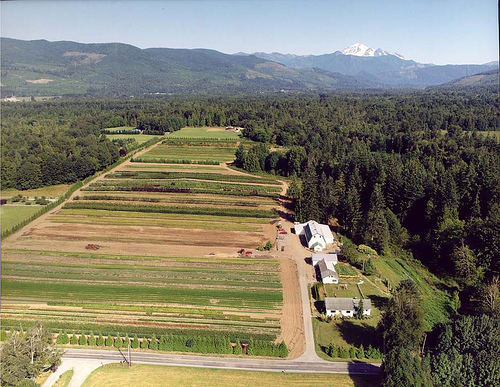
[G2:709]
Select image to enlarge
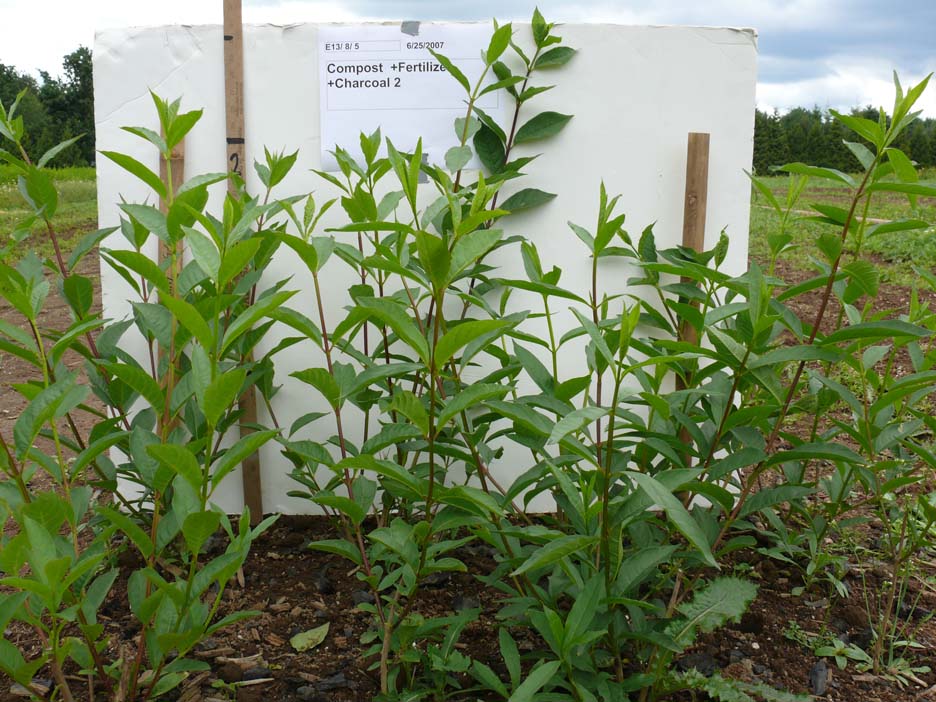
This is an image of our charcoal as soil additive study at our nursery. Shown is one of our test subjects a local native shrub that we propagate and sell for riparian restoration projects. Black Twinberry, Lonicera involucratai. This plant was a 2 year old seedling, bareroot harvested and stems clipped to 6 inches before planting in the test bed 7 weeks ago.
Volatile Matter (VM)
Growing plants with charcoal
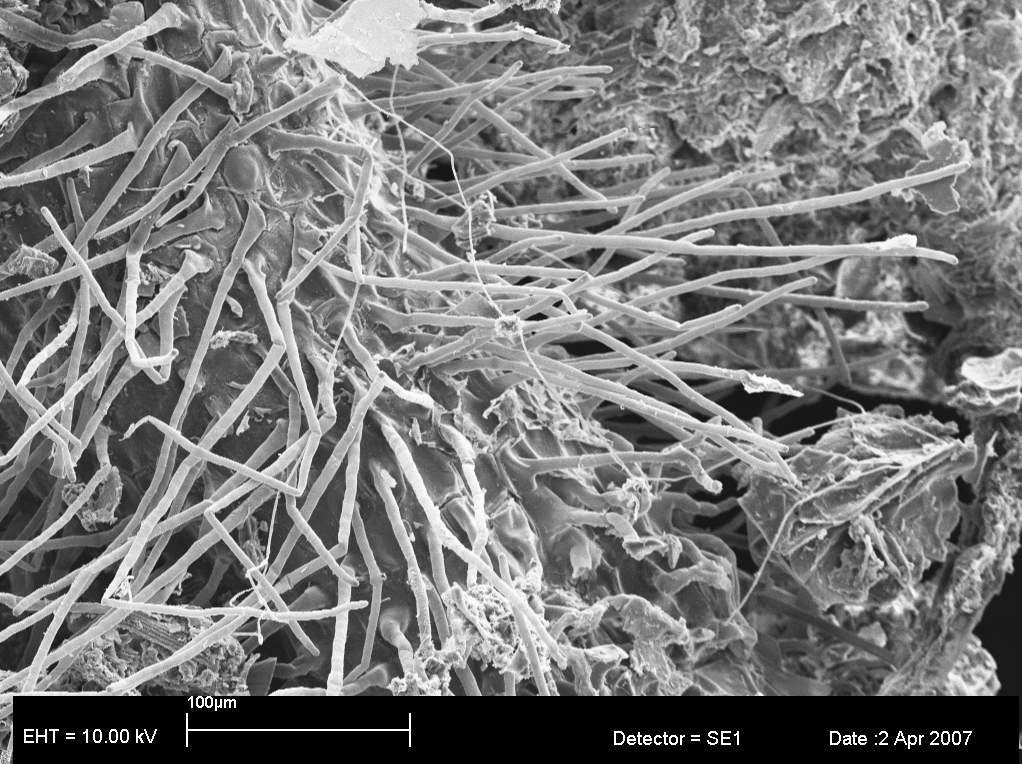
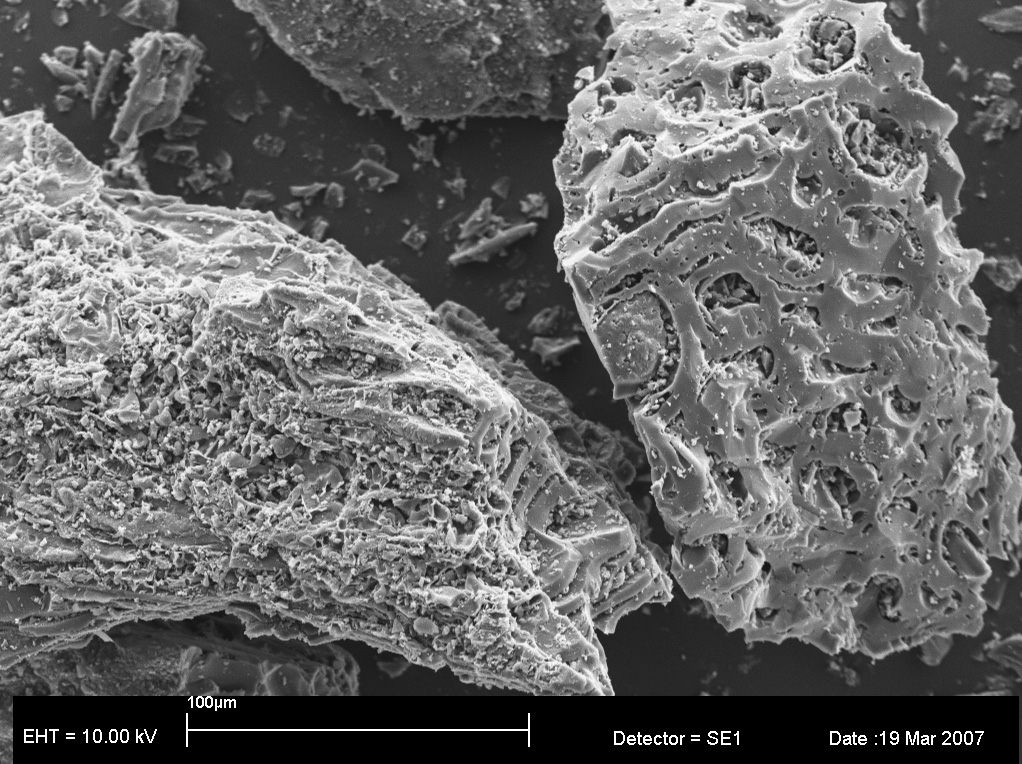
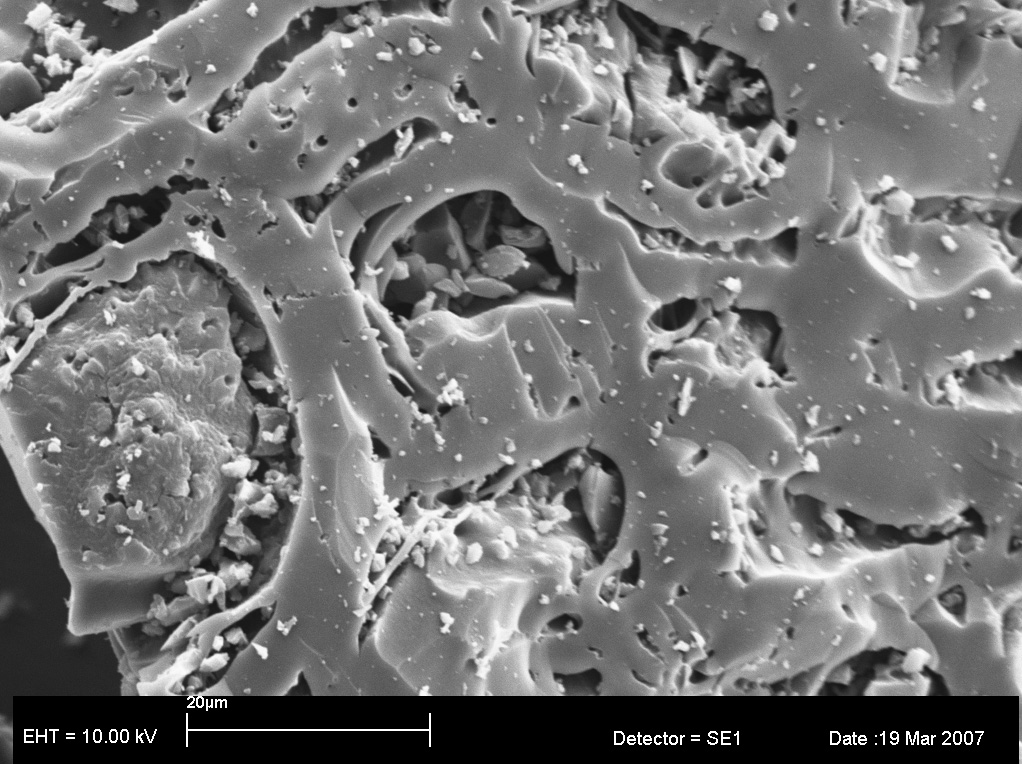
Submitted by Tom Miles on Sat, 2007-06-30 20:39.Images of Pyrolysed Biocarbons (PBCs) and Dielectric relaxation of water adsorbed on wood and charcoal
Submitted by Tom Miles on Tue, 2007-05-08 13:02.Images of Pyrolysed Biocarbons (PBCs) and Dielectric relaxation of water adsorbed on wood and charcoal
Alfred Harris to Stephen Joseph, BEST Energies, May 8, 2007
[G2:372]
Select image to enlarge
Factors Influencing Charcoal Quality
Submitted by Tom Miles on Wed, 2007-03-07 17:03.What Factors Influence Charcoal Quality?
Tom Miles, Biomass Cooking Stoves June 18, 2006
Temperaturei
100C -> Wood drying 19 MJ/kg
220C -> Wood becomes brown
250-270C-> Torrefaction 28% fixed carbon, 72% volatile 23.9 MJ/kg
280C -> Wood becomes deep brown-black
300C -> 68% char 32% volatile 40% yield soft, brown, friable
Standard Test Method for Chemical Analysis of Wood Charcoal ASTM D1762-84
Submitted by Tom Miles on Mon, 2007-03-05 21:25.Standard Test Method for Chemical Analysis of Wood Charcoal ASTM D1762-84
Attached is the ASTM D1762-84. This test method covers the determination of moisture, volatile matter, and ash in charcoal made from wood. The test method is applicable to lumps and briquets and is designed for the evaluation of charcoal quality. The test method employs apparatus that is found in most laboratories and is adapted to routine analyses of a large number of samples.
Charcoal Properties
Submitted by Tom Miles on Sun, 2007-03-04 23:34.Dear friends: terra preta is fascinating in part because it involves so many disciplines. My viewpoint is that of a fuel scientist/chemical engineer.
My laboratory produces well-characterized charcoals for a wide variety of research endeavors, including carbon fuel cell studies, metallurgical charcoal applications, activated carbon production, and terra preta research (with my colleagues Dr. Goro Uehara, Dr. Jonathan Deenik, and Tai McClellan in the University of Hawaii’s College of Tropical Agriculture and Human Resources). With this message I wish to call your attention to the elementary properties of charcoal that I think about when I am producing a charcoal for one of our research endeavors.
Both the feedstock and the process (i.e. pyrolysis) conditions influence the properties of the charcoal product. For example, oak wood has little ash; consequently its charcoal also has little ash. On the other hand, rice hulls have much ash (nearly pure silica), and so does its charcoal.