Henderson

Puzzle

Puzzle
Max Henderson, June 15, 2008
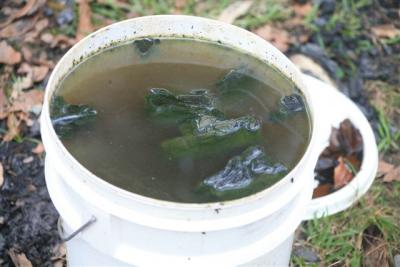
Floating CharFloating Char


More Trial Data With Explanatory Photos

More Trial Data With Explanatory Photos
Max Henderson May 26, 2008
Kiln ExternalKiln External
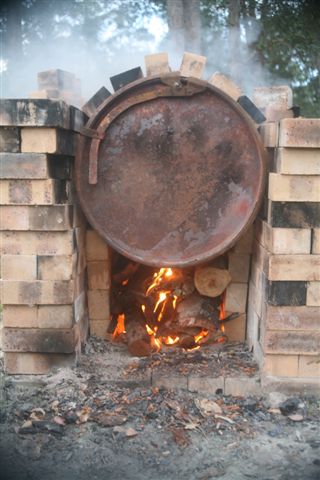
Kiln Fire Under DrumKiln Fire Under Drum

First is from the front of the kiln just after the fire was lit and before bricks were added across the front. The drum lid is held in place with an over-centre clamp. The side and rear bricks have been moved in to touch the drum to improve insulation.

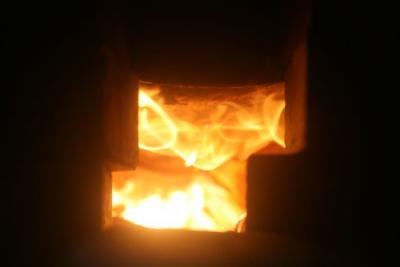
Second is through a hole in the front brickwork, shortly after the gas started to flow. There are two fire layers – at the base of the fireplace, and an upper fire just under the drum. This is the gas exiting from the holes in the base of the drum, igniting, and then curling upwards.

From this weekend:

Assume that the drum is set up in the brick kiln
Equipment: chainsaw, axe and wheelbarrow
Old and dry fallen timber is available 30 metres from trial site.
Chainsaw and split 110 kg hardwood for drum load
Ditto 40kg for fuelwood
Load drum
Gather twigs and small dry branches, load fireplace with these and the 40kg wood
Seal drum and light fire.
Time = 45 minutes
Char output = 29kg.

Rough cost, including chainsaw fuel and some provision for wear and tear, and (say) $A20/hr for labour, then maybe $18 for 29kg char. If I could get $1/kg for char chunks for BBQ’s, and keep the fines for the soil, I’d be about square. Packaged charcoal (in briquettes with sawdust and other stuff added) retails in Oz for around $2/kg.

I still maintain and will get around to proving it some time, that if surplus gas could be withdrawn and stored, and then used for the fire, the 40kg of firewood would not be necessary. The level of the flames from the gas escaping through the poor drum seal demonstrates this, plus there are opportunities to improve on my rudimentary house brick insulation.

An observation is that smaller pieces of wood are more efficient. And the smaller the pieces the more mass that can be loaded into the drum. I’ve had successful chars with hardwood up to 20cm diameter, but I’ve also had some cases where the centres weren’t fully charred. A compromise is maximum thicknesses around 8-10cm.

I have to admit that I remain in awe of the whole process. Normally I start the fire around 17:00. It’s autumn here and dark and increasingly chilly by 18:00, which is around when the gas starts to flow. There’s a gentle whistle to start with, and within 15 or 20 minutes this becomes a muted roar, the flames creep around the gap between the drum and the bricks and filter through the bricks on top of the drum, the top bricks begin to glow red, and I sit (with glass in hand) and ponder on the vast amount of energy being released from 110kg of wood, and which lasts for several hours.

My latest garden trial includes basil, broad beans, corn, capsicum, egg plant and parsley in the trial plots. The beds were made on top of untilled soil, which is compacted and so hard that in another bed I had to use a mattock to break it up. The mix in the main bed includes mulch, cocopeat, some worm compost and char. This has now been established for 6 weeks, and not only is it easy to dig down to the base by hand, the first inch or so of soil under the bed is friable. The bed without the worm compost and char is also friable but the soil layer underneath is still rock-hard. The colour, vigour and size of the plants in the bed with char are substantially ahead of the control bed. Also, we’ve had no rain for 2 months and all plants are only watered once/week. There’s something going on here that I don’t fully understand, but I’m not complaining.

Max H


More Trials

More Trials
Max Henderson,May 12, 2008

If you can bear with me here is some info from last weekend’s
trials. Various conclusions are probably of little scientific merit and may well be blindingly obvious but I’ll include for those who maybe don’t have one of these exciting toys.


  1. The original second–hand house brick kiln had 15cm/6” (when will the US
    join the rest of the world?) gaps between the drum and the bricks on both
    sides, and a relatively shallow space under the drum for the initial fire.
    The idea was that it would be easier to add fuelwood on the sides, but in
    fact this reduced the effectiveness of the insulation.
  2. I re-laid the bricks to give a greater fire space under the drum for the
    initial fire, and moved the side walls inwards so that the only gap was
    between the ridges of the drum and the bricks. The basic concept was to
    apply the heat from underneath, and to insulate as best possible (under
    the primitive circumstances) against any unnecessary heat losses
  3. The drum was loaded with around 100kg of old dry dense hardwood, plus 2 x 75mm
    thick telephone books and some tyre scraps I had collected from beside the
    highway.
  4. Scrap dry wood was loaded under the drum and fired at 17:00. Once that achieved
    a significant burn I added bricks to the open front to further improve
    insulation
  5. I’ve learnt that a slow initial burn is best as opposed to a blast. The
    assumption here is that the mass of material in the drum (despite MC of
    maybe less than 12%), needs gradual heat (given the substantial insulating
    properties of dry dense wood) well before the stage when pyrolisis can
    begin and be sustained. I’ve done the opposite –high initial heat, quick
    gasification, and then no continuation. There is a lot to discuss here,
    including the use of ‘waste’ heat to raise the temp and reduce MC, in the
    following batch.
  6. By 18:00 the first gas burn had started and by 18:15 the 8 x 8mm holes in the
    base of the drum were all roaring
  7. This was about the 10th trial, and with each the seal on the drum
    lid has become less effective. This photo shows the burn of the escaping
    gases through these leaks. In a totally un-scientific guess I’d suggest
    that at least a litre of gas/second was burning happily through the gaps.
    None of this energy was in any way contributing to the char process. These
    waste gases burnt for 2 hours.


  1. With all the jets alight I then added bricks to the top of the drum, giving
    better insulation.

  1. By 19:00 the drum was glowing red hot when seen through the gaps in the top
    bricks, except for a small strip down the centre of the top. I dropped
    some glass from a broken bottle in a couple of the gaps, and within
    minutes the glass became malleable.
  2. Around 21:00 the gas burn started to slow down, and by 22:00 the last flame was
    gone.
  3. The front bricks were removed at dawn, and by midday the drum was cool enough
    to be opened without a risk of the char catching alight.

  1. The
    charring was complete, including the tyre rubber, the 2 phone books, and
    dense hardwood as large as 20cm/8” in diameter.
  2. Volume
    loss was in the region of 20% at a guess.


It is the energy output that continues to stun me. The
volume of gas that escaped through the poor lid seal was very substantial and
burnt for over 2 hours. In addition, the gas burning under the drum was
obviously far in excess of the volume required to maintain the char process,
just using the red heat of the drum as an indicator. And on top of that was the
vast heat energy given off to the atmosphere despite the attempts to provide
insulation.


I’ll continue making batches using this crude system
every weekend, but there’s not a lot more to prove and I now really need to
take the lessons learnt and build a decent drum and kiln. In particular the
effectiveness of the insulation will be a considerable determinant in the efficiency
of the process. I will aim for a castable refractory kiln in a similar shape to
the current brick one, with relatively narrow gaps between the drum and the
refractory except for the “firebox” underneath. It will have two hinged doors
at the front – the upper one allowing the drum to be slid out above the lower
firebox door. A similar upper door also for the rear, and this will also have
an adjustable vent to allow heat to escape rearwards. This would lead into a
second chamber where another drum loaded with wood is waiting its turn in the
queue, being pre-heated at the same time. When one drum has completed the char
process, it will be slid out to cool, the drum in the heat chamber at the rear
is slid in to take its place, the refractory is at high temp already, the gas
jets are lit, doors closed, the third drum is loaded and slid into the warming
chamber….


The drums to be fabricated from boiler plate, and
maybe with domed lids and toggle screws to clamp down. Then I need to work out
how to plug in a pipe or hose to vent off excess gas, plus a compressor and a
pressure vessel to store. And that pre-supposes a capacity to record
temperatures inside the drum so that this info can be fed to a controller that
will make decisions when and if to pipe off some gas for storage. Plus a
serious gas burner system under the drum, because I believe we can eliminate
the need for wood fuel and just use some of the stored excess gas. And then
some boiler tube at an upper level through which water can be piped and fed into
a large storage tank as a heat bank, and then into the house and/or a
greenhouse in winter through sub-floor piping, radiators, or a concrete storage
tank under the slab. I don’t have a house at the farm yet or even a greenhouse
much less an electricity supply but that just adds some more interesting
challenges. Its down to time and dollar availability.


In the meantime I’m continuing with the garden trials,
and certainly there is visible evidence of improved growth and vigour in the
plots which had the char added. The best is the one that also had some cocopeat
organic matter added, as well as some worm castings. Digging down a few inches
and grabbing a handful gives this sweet-smelling crumbly mix, laden with
organic matter and just seeming to be bursting with goodness. Hardly a
scientific analysis but I’ve been handling and smelling soil for a long time
and this lot is just about good enough to eat.


Max H


On the Practical Side

On the Practical Side
Max Henderson, SE Queensland, Australia, April 19, 2008
Cooran char bed finished 031608
(Select photo to enlarge)
Dear All,

For those on the list who haven’t had the opportunity to experiment, here are some photos of my first trials. Apologies to those who are well ahead of this stage.

Photo 1 shows the very basic kiln, constructed of un-bonded second-hand bricks and sized to take a 200 litre drum (55 gallon in he US). This particular drum has a removable lid held in place with an over-centre clamp.
Char kiln01
Photo 2 shows the drum in place and loaded with seasoned offcuts of local hardwoods such as Ironbark (Euc piniculata), which is hard and dense. The drum is raised off the brick floor the height of 2 bricks to allow firewood to be placed under. The base of the drum (on its side) is drilled with 8 x 8mm holes in a line evenly spaced. These permit the generated gases to exit and burn.
Char kiln02
3 shows the flames after the load has started to gassify. Depending in the intensity of the external fire and the sizes, moisture content and density of the timber load, the beginning of the gasification phase can take from 30 minutes upwards.
Char kiln03
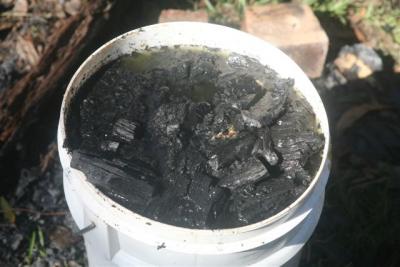
4 and 5 show the char output.
Char kiln04
Char kiln05
Photo 6 gives an idea of the vast amount of energy released. At this trial the front of the kiln was also bricked up once the fire had started, to further concentrate the heat. For pure spectacle this is best done at night, preferably lubricated with copious cold beers. This is indeed hot and thirsty work. What you can’t hear is the whistling of the gas as it exits the holes in the drum, and the roar of the fire. Obviously there is huge opportunity to capture surplus gas and compress to store.
Char kiln06
7 shows the first experimental vegetable bed prior to planting, approx 4m x 1.2m. The char was broken up before adding but this could have been done much better. Around 10cm thickness was added to the bed. Also added was 5 cm of compost and 1 kg of NPK fertiliser (13:13:15 + 2Mg). The bed was then forked a number of times to a 20cm depth. For comparison purposes an adjacent bed was prepared in the same manner including the compost and the NPK, but no added char.
Cooran char bed finished 031608
Corni, broad beans and basil were planted in both. Definitely germination was better in the char bed and definitely initial growth was also more vigorous. Unfortunately the wallabies broke the fence ending that trial, but the fence has been reinforced and the beds planted again. This time I’ve added a third bed the same as the first with the char, compost and NPK, but added 5 cm of worm castings from my composting worm experimental pile. (I believe composting worms have equivalent miracle capacity as does char).

The test site is just above the creek flats on land that was a dairy farm for maybe 100 years before being abandoned some 20 years ago and allowed to return to natural forest, mainly eucalypts. Around 5 acres have been cleared. Soil texture is loamy, with recent tests indicating deficiencies across the full range of nutrients. Annual rainfall is in the 1500mm range. Being a fairly civilised part of the world we don’t have any of that snow stuff but winter daytime temps can plunge horrifically to 10 deg C (50F), with occasional night time frosts. Terrifying. Right now we’re at the beginning of Autumn.

I’ll update in a couple of weeks.

Max H
mfh01@bigpond.net.au


Syndicate content